Headlines

Machine Anxiety

SHASS

The study of bureaucracy stands as a reminder not to dismiss human agency too rapidly. For all the fears it evoked about depersonalized rule, bureaucracy never eliminated human judgment. The same might be true for AI. This means that we need to investigate how individual and organizational actors mediate the adoption of new technologies, and how they are in turn transformed by them. This calls for empirical social science.

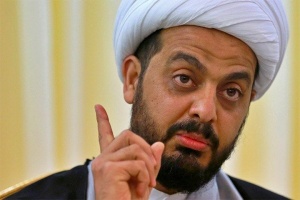
The role of Iraq’s influential Shiite clerics is changing. Here’s how.

Marsin Alshamary THE WASHINGTON POST

Graduate student Marsin Alshamary writes for The Washington Post about how the role of Iraq’s Shiite clerics is transforming. “Because their authority ultimately stems from the population, Shiite clerics will have to adapt to popular demands — which are now tending toward a secular state — or risk losing relevance,” writes Alshamary.

Mining a trove of text

Leda Zimmerman MIT DEPARTMENT OF POLITICAL SCIENCE

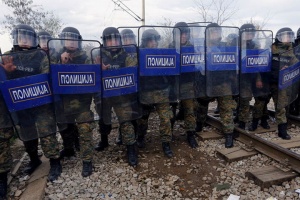
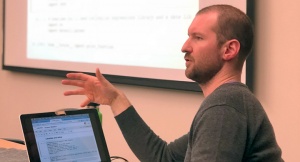
Few students boast as precocious a start in their field as Andrew Halterman.  At age seven, Halterman accompanied his mom, a political scientist, on a research trip to Bosnia. It was just a few months after the ceasefire in that region's civil war. "I learned all about the conflict and ethnic cleansing," he says. 

Looking at justice through the lens of political theory

School of Humanities, Arts, and Social Sciences MIT News

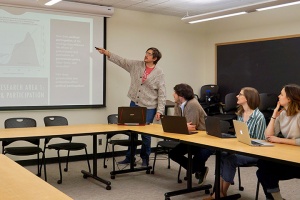
It’s a charged time to be talking about justice. But in Bernardo Zacka’s classroom, the concept of justice is center stage. An assistant professor of political science, Zacka is inclined to teach on topics that are much discussed in the current political climate — including power, inequality, and the challenges of collective action.

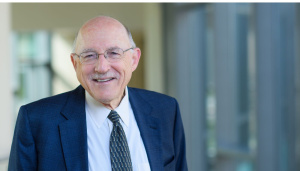
3 Questions: Stephen Van Evera revisits World War I

Michelle English Center for International Studies

One hundred years ago on Nov. 11, 1918, the Allied Powers and Germany signed an armistice bringing to an end World War I. That bloody conflict decimated Europe and destroyed three major empires (Austrian, Russian, and Ottoman). Its aftershocks still echo in our own times.

A bottom-up view of the state

Leda Zimmerman MIT Department of Political Science

An endless wait in a crowded room. The official's impassive expression handling a client in need...
Bernardo Zacka '05, a newly appointed assistant professor of political science, is well acquainted with exasperating and sometimes infuriating public service bureaucracies.

Alumni Books Podcast: Claiming the State

Joe McGonegal Slice of MIT

Gabrielle Kruks-Wisner MCP '06, PhD '13, assistant professor of politics and global studies at the University of Virginia, is the author of Claiming the State: Active Citizenship and Social Welfare in Rural India, published in August 2018 by Cambridge University Press. In the book, Kruks-Wisner shares research conducted over the past decade in Rajasthan, India about how those in conditions of poverty make claims on their local and state governments.

Refining the “science” of political science

Peter Dizikes MIT News

Political pundits are usually confident about their ability to identify why citizens think the way they do. Look at cable television or the internet, and you’ll find someone attributing an election result to economic anxiety, or claiming the latest polling numbers reflect a recent news story. Teppei Yamamoto has his doubts.

The aftermath of violence

Leda Zimmerman

Although Volha Charnysh initially distanced herself from her native land of Belarus, she has in recent years found reason to return to her Eastern European roots.

Tracking political interactions in the Philippines

Leda Zimmerman MIT Department of Political Science

Since starting her doctoral studies in 2013, Nina McMurry has logged more than two years of field work in the Philippines. It has sometimes been a slog—literally. "Some of the places we need to travel for data collection are pretty remote," she says. "This past summer, it was a particularly bad rainy season, and even when the boats were running from the mainland to our destination, it could take two or more hours for our survey teams to climb into the mountains, where roads were entirely flooded out."

3 Questions: Database shines a bright light on Washington lobbying

Peter Dizikes MIT News

Follow the money. It’s a famous phrase from the Watergate era, but it applies to everyday life in modern Washington as well. That advice just got easier for everyone to carry out, thanks to the launch of LobbyView.org, a new public database created by MIT political scientist In Song Kim

A passion for policy

Nuclear Science and Engineering at MIT

While still an undergraduate at MIT, Luisa Kenausis ’17, co-founded MIT Students for Nuclear Arms Control. The organization’s goal: to raise awareness of nuclear arms control issues. As a Herbert Scoville Jr. Peace Fellowship at the Center for Arms Control and Non-Proliferation this spring, Kenausis continued her work to raise public awareness of these issues.

Election Management in the U.S. is Improving

Claire DeSoi MIT Election Data & Science Lab (MEDSL)

States’ administration of elections overall improved by 6 percentage points between 2012 and 2016, according to the Elections Performance Index (EPI) released today by the MIT Election Data & Science Lab (MEDSL).

Environmental regulation in a polarized culture

Fatima Husain MIT News

With an affinity for environmental issues and a knack for analysis, MIT doctoral student Parrish Bergquist aims to clarify the ways in which changing political landscapes influence environmental policy outcomes.

3Q: Barry Posen on the NATO Summit and state of the alliance

Michelle English MIT News/Center for International Studies

Barry Posen, a leading national security expert and Cold War historian, offers in-depth scholarship on the historic meetings. Posen, a Ford International Professor of Political Science and director of the MIT Security Studies Program,  discusses the role of NATO today, and whether the alliance is “stronger than ever,” as President Trump stated in a post-summit press conference.

Solidarity and separatism

Leda Zimmerman

Doctoral student Elissa Berwick listens closely to the calls for independence rising from regions around the world.