Headlines

WOTR PODCAST: A BIG DEBATE ABOUT A LITTLE NUKE

War on the Rocks

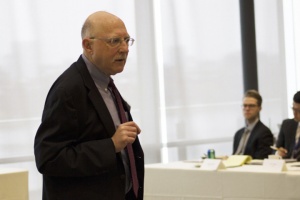
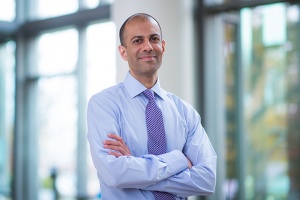
Why are so many people at odds over low-yield nuclear weapons? Listen to this fierce debate between Frank Miller – a long-suffering veteran of the Pentagon and nuclear strategy, Dr. Olga Oliker of CSIS and a longtime observer and scholar of Russian nuclear and military doctrine, and Vipin Narang – a professor at MIT and, most importantly, a War on the Rocks senior editor. Co-hosts Ryan Evans and Usha Sahay did their best to moderate this high-yield debate about low-yield nukes. Get ready for the fallout.

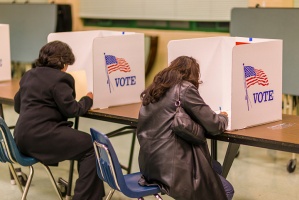
Vote of Confidence

Kara Baskin Spectrum

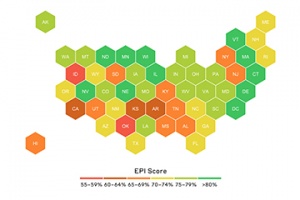
The MIT Election Data and Science Lab (MEDSL), launched in January 2017, champions the efficiency, integrity, and transparency of the democratic process

Sizing up the North Korea Showdown

Peter Dizikes MIT Technology Review

Are North Korea’s recent missile tests—and President Trump’s outspoken response to Kim Jong Un—moving us closer to war? For insight, MIT Technology Review spoke with Vipin Narang, an associate professor of political science, author of Nuclear Strategy in the Modern Era, and a leading analyst of the nuclear tactics of smaller states.

When the media is in on the experiment

With a readership that runs into the millions, few would argue that the New York Times doesn’t influence public debate on a host of issues. But what about a news outlet with a circulation of only about 50,000?

Why some Muslim clerics become jihadists

Peter Dizikes MIT News Office

What turns people into radical jihadist clerics? A new book by an MIT political scientist offers a new answer: thwarted career ambitions.

An American in Paris

Leda Zimmerman MIT Political Science

Moving to another country often sparks serious thinking about identity and belonging. This is doubly true for Dekeyser: She is an American in Paris, on a multi-year research project investigating the ways Islam shapes people’s sense of citizenship and allegiance to the French state.

Jesse L. White, Jr. (1979) endows fellowship fund

Leda Zimmerman

Mississippi native Jesse L. White Jr. PhD ’79 came to MIT with the aim of understanding voting behavior in his home state and gaining a broader perspective on the world. As a political science doctoral student, he found what he was looking for: “Growing up in a very provincial environment, going to a world-class institution was life-altering,” White says. “I feel like I owe so much to MIT.”

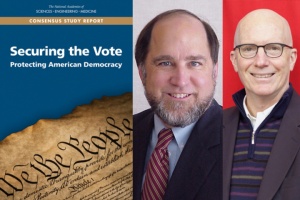
Mens et Manus America examines election integrity

School of Humanities, Arts, and Social Sciences

Various concerns about the security of U.S. elections have arisen over the past two decades, some more significant than others. While many studies have shown that voter fraud, for instance, is vanishingly rare in the U.S., what about the state of electoral administration, lost votes, and cyberattacks? On Oct. 16, two experts teamed up at MIT to share insights from their research on what is and isn't working in America's electoral system.

Professor Nazli Choucri discusses sustainable development and violence on Peace Talks Radio

Host: Suzanne Kryder Peace Talks Radio

Could we be trying to increase peace through speech or action, but forget about the planet’s ability to handle population growth? Peace Talks Radio discuss the impact of
population on peace and what people can do about it with Dr. Nazli Choucri, Professor of Political Science at the Massachusetts Institute of Technology, and John Seager, President and CEO of Population Connection.

Uber a 'shared shock' around the world that created a perfect experiment

Mary Beth Faller, ASU Now ASU Now

The ride-sharing platform Uber burst onto the scene a few years ago, creating a “shared shock” in several countries at about the same time with its disruptive practices. And that makes it the perfect natural experiment. “For a comparative political scientist like me who likes to study how things work across different countries, Uber is a wonderful case because it spread quickly across the globe,” said Kathleen Thelen, the Ford Professor of Political Science at the Massachusetts Institute of Technology.

Bridging the Science Policy Divide

Fatima Husain MIT News

In the eighth grade, in response to being asked what she wanted to be when she grew up, Talia Weiss critically examined her aspirations and gathered them into one succinct statement: “I wanted to be a writer, dancer, and an astrophysicist,” she recalls. Weiss, now an MIT senior majoring in physics, can comfortably say she’s stuck to her goals, save for a little variation.

The Political Rumor Mill

Scholars Strategy Network/No Jargon

Political rumors are spreading across the country and the widening divide between parties is only making them more potent. Professor Adam Berinsky discusses where these rumors come from and what, if anything, can be done to combat them.

International Policy Lab issues new call for proposals

Dan Pomeroy, International Policy Lab

The International Policy Lab (IPL) within the Center for International Studies has issued its third Institute-wide call for proposals. The IPL helps leading MIT researchers develop the policy implications of their research and better inform the policymaking community in the United States and abroad. It provides funding and staff support for translating scholarly work into digestible, policy-relevant materials and for direct outreach to policymakers.