
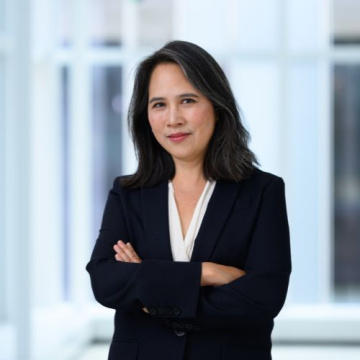
Lily L. Tsai
Ford Professor of Political Science
Director, Concourse Program
Class of 1960 Innovation in Education Fellow
Comparative politics; political behavior; morality and politics; state-society relations; governance
Biography
Lily L. Tsai is the Ford Professor of Political Science at the Massachusetts Institute of Technology (MIT) and the Director of the Concourse Program, as well as the former Chair of the MIT Faculty. Her research focuses on governance, legitimacy, and the role of moral evaluations in political behavior, with particular interests in the creation of trust, cooperation, and community. In 2016, she founded MIT GOV/LAB to work with policymakers and practitioners on innovations in democratic governance and civic engagement. Tsai is the author of two books, Accountability without Democracy and When People Want Punishment: Retributive Justice and the Puzzle of Authoritarian Popularity, and over two dozen journal articles. She is the current Class of 1960 Innovation in Education Fellow and co-leads the Compass Initiative, which brings together faculty and students from humanities and STEM to design classes and activities that promote debate and reflection about moral, social, and civic questions.
Research
The role of moral evaluations in political behavior
Trust, social capital, and collective self-governance
AI and democratic deliberation
Government accountability and the politics of public health and public goods provision
Recent Publications
Books
2021 When People Want Punishment: Retributive Justice and the Puzzle of Authoritarian Popularity. Cambridge Studies in Comparative Politics: Cambridge University Press.
2021 Accountability Without Democracy: Solidarity Groups and Public Provision in Rural China. Cambridge Studies in Comparative Politics: Cambridge University Press.
Articles
2025 “Rediscovering the Pleasures of Pluralism: The Potential of Digitally Mediated Civic Participation.” UCLA Journal of Law and Technology, 30, 179. With Alex Pentland.
2025 “Becoming Infrastructure: A Critical Realist Account of the Evolution of DHIS2 as Digital Public Health Infrastructure in Sierra Leone.” Proceedings of the Association for Computing Machinery (ACM) on Human-Computer Interaction. With Innocent Ndubuisi-Obi and Nuole Chen.
2025 “Do Government Accountability and Responsiveness Enhance Support
for Property Taxes? Experimental Evidence from China.” World Development. With Xiaobo Lü, Minh Trinh, and Ping Zheng.
2024 “Toward Building Deliberative Digital Media: From Subversion to Consensus.” PNAS Nexus. With Alex Pentland.
2023 “Taking Responsibility for Tomorrow: Remaking Collective Governance as Political Ancestors,” January, Daedalus vol. 152, no 1.
2023 “Managing US-China university research, risks, and relations.” Science. With Richard Lester, Suzanne Berger, Peter Fisher, M. Taylor Fravel, David Goldston, Yasheng Huang, and Daniela Rus.
2022 “What Makes Anticorruption Punishment Popular? Individual-Level Evidence from China.” Journal of Politics. With Minh Trinh and Shiyao Liu.
2020 “Building Credibility and Cooperation in Low-Trust Settings: Persuasion and Source Accountability in Liberia during the 2014-2015 Ebola Crisis.” Comparative Political Studies. With Benjamin Morse and Robert Blair.
2017 “Public Health and Public Trust: Survey Evidence from the Ebola Virus Disease Epidemic in Liberia.” Social Science and Medicine. 172 (January): 89-97. With Robert Blair and Benjamin Morse.
Teaching
17.955 State, Society, and Political Behavior in Developing Contexts
17.962 Second-Year Paper Seminar
21.01 Compass: Moral and Social Questions about the Human Condition
21.A01 Reading Great Books with Compass
CC.010 Concourse Seminar I
CC.011 Concourse Seminar II
News



Biography
Lily L. Tsai is the Ford Professor of Political Science at the Massachusetts Institute of Technology (MIT) and the Director of the Concourse Program, as well as the former Chair of the MIT Faculty. Her research focuses on governance, legitimacy, and the role of moral evaluations in political behavior, with particular interests in the creation of trust, cooperation, and community. In 2016, she founded MIT GOV/LAB to work with policymakers and practitioners on innovations in democratic governance and civic engagement. Tsai is the author of two books, Accountability without Democracy and When People Want Punishment: Retributive Justice and the Puzzle of Authoritarian Popularity, and over two dozen journal articles. She is the current Class of 1960 Innovation in Education Fellow and co-leads the Compass Initiative, which brings together faculty and students from humanities and STEM to design classes and activities that promote debate and reflection about moral, social, and civic questions.
Research
The role of moral evaluations in political behavior
Trust, social capital, and collective self-governance
AI and democratic deliberation
Government accountability and the politics of public health and public goods provision
Recent Publications
Books
2021 When People Want Punishment: Retributive Justice and the Puzzle of Authoritarian Popularity. Cambridge Studies in Comparative Politics: Cambridge University Press.
2021 Accountability Without Democracy: Solidarity Groups and Public Provision in Rural China. Cambridge Studies in Comparative Politics: Cambridge University Press.
Articles
2025 “Rediscovering the Pleasures of Pluralism: The Potential of Digitally Mediated Civic Participation.” UCLA Journal of Law and Technology, 30, 179. With Alex Pentland.
2025 “Becoming Infrastructure: A Critical Realist Account of the Evolution of DHIS2 as Digital Public Health Infrastructure in Sierra Leone.” Proceedings of the Association for Computing Machinery (ACM) on Human-Computer Interaction. With Innocent Ndubuisi-Obi and Nuole Chen.
2025 “Do Government Accountability and Responsiveness Enhance Support
for Property Taxes? Experimental Evidence from China.” World Development. With Xiaobo Lü, Minh Trinh, and Ping Zheng.
2024 “Toward Building Deliberative Digital Media: From Subversion to Consensus.” PNAS Nexus. With Alex Pentland.
2023 “Taking Responsibility for Tomorrow: Remaking Collective Governance as Political Ancestors,” January, Daedalus vol. 152, no 1.
2023 “Managing US-China university research, risks, and relations.” Science. With Richard Lester, Suzanne Berger, Peter Fisher, M. Taylor Fravel, David Goldston, Yasheng Huang, and Daniela Rus.
2022 “What Makes Anticorruption Punishment Popular? Individual-Level Evidence from China.” Journal of Politics. With Minh Trinh and Shiyao Liu.
2020 “Building Credibility and Cooperation in Low-Trust Settings: Persuasion and Source Accountability in Liberia during the 2014-2015 Ebola Crisis.” Comparative Political Studies. With Benjamin Morse and Robert Blair.
2017 “Public Health and Public Trust: Survey Evidence from the Ebola Virus Disease Epidemic in Liberia.” Social Science and Medicine. 172 (January): 89-97. With Robert Blair and Benjamin Morse.
Teaching
17.955 State, Society, and Political Behavior in Developing Contexts
17.962 Second-Year Paper Seminar
21.01 Compass: Moral and Social Questions about the Human Condition
21.A01 Reading Great Books with Compass
CC.010 Concourse Seminar I
CC.011 Concourse Seminar II